
Giardini della Biennale
The Biennale gardens · 19th c.
The only sizeable public park in central Venice — laid out on Napoleonic landfill in 1807 and now scattered with the national pavilions of the Venice Biennale.
History
Napoleon ordered the gardens in 1807 by decree, three years after annexing Venice into his Kingdom of Italy. To clear the ground his engineers demolished four churches, a Capuchin monastery and a hospice; the rubble was used to fill in a marshy salt-pan, and the resulting park was the first sizeable public green space in a city that had never had one. They were Venice's belated answer to the public promenades every other European capital had laid out half a century earlier.
From 1895, when the city founded the Esposizione Internazionale d'Arte (the Biennale di Venezia), the gardens started filling up with national pavilions. The Central Pavilion went up first, in the same year; the Belgian pavilion (1907) is the oldest of the national ones, followed by the Hungarian (1909), the German (originally Bavarian, 1909) and the British (1909). The pavilions cluster along the gravel paths in no master plan — they were built piecemeal by whichever country could pay, which is why the result reads like an unsorted architectural museum.
Some of the buildings are themselves the reason to come. Carlo Scarpa designed the original Venezuelan pavilion in 1956 and the small ticket booth at the entrance; Sverre Fehn's Nordic pavilion (1962) is one of the great small post-war buildings; Alvar Aalto's Finnish pavilion (1956) is a folded triangle of timber and corrugated metal that was meant to be temporary and is still standing. In 1980 the Biennale added an architecture exhibition, every odd year, in addition to the art Biennale every even year — so the gardens are now active for roughly seven months of every year.
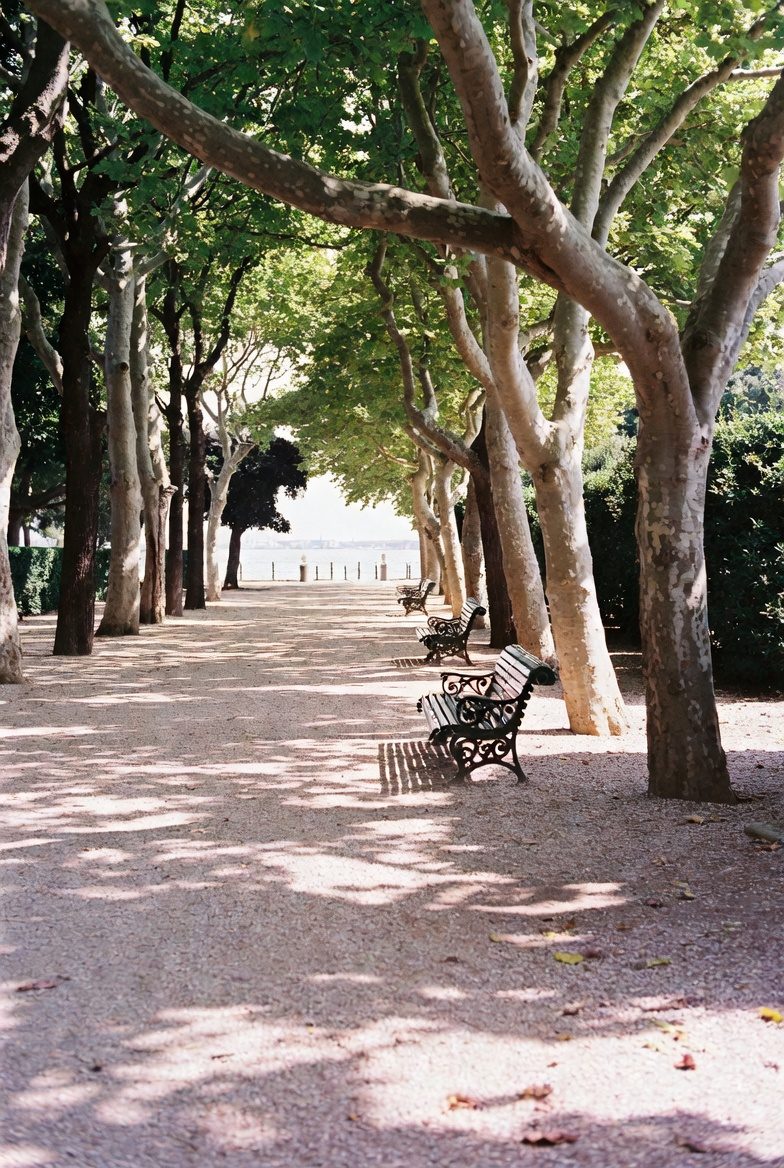
Outside the Biennale the gardens are simply a park: pines, plane trees, a few cafés, a long view across the basin to San Giorgio Maggiore. Locals walk dogs here and run laps along the gravel paths.
Visit in winter. The pavilions are shut, the leaves are down, and you can read the strange architectural archive of a hundred and twenty years of national self-portraits without queuing.
Highlights
Nordic Pavilion
Sverre Fehn, 1962 — a concrete grid roof that filters Venetian light through itself.
Brazilian Pavilion
Amancio Williams, 1964 — small, low, almost hidden among the trees.
The riva walk
From the gardens west along the lagoon back toward the Arsenale — the longest uninterrupted waterfront walk in Venice.
Visit
- Address
- Sestiere Castello, 30122 Venezia
- Hours
- Public park: 8:00 – sunset. Pavilions: during Biennale only (May–Nov)
- Notes
- Pavilion buildings closed outside Biennale dates.
- Getting there
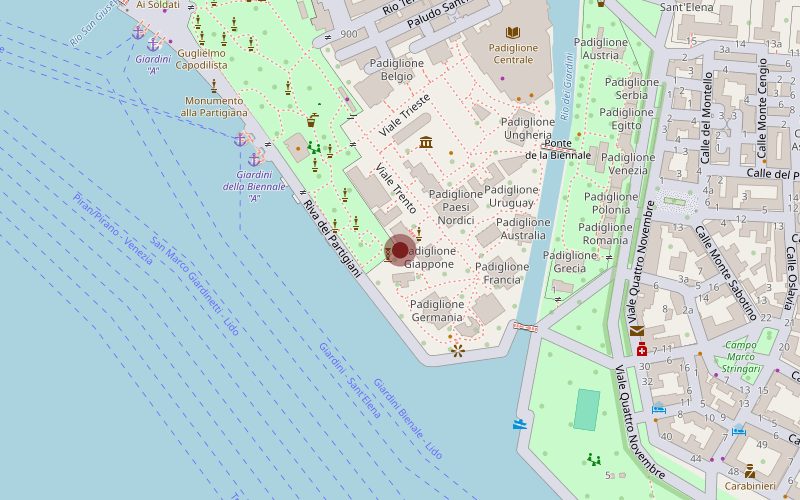
- Vaporetto line 1, 5.1 or 4.1 to Giardini. The park entrance is at the end of the Riva.
© OpenStreetMap contributors
See also
Burano
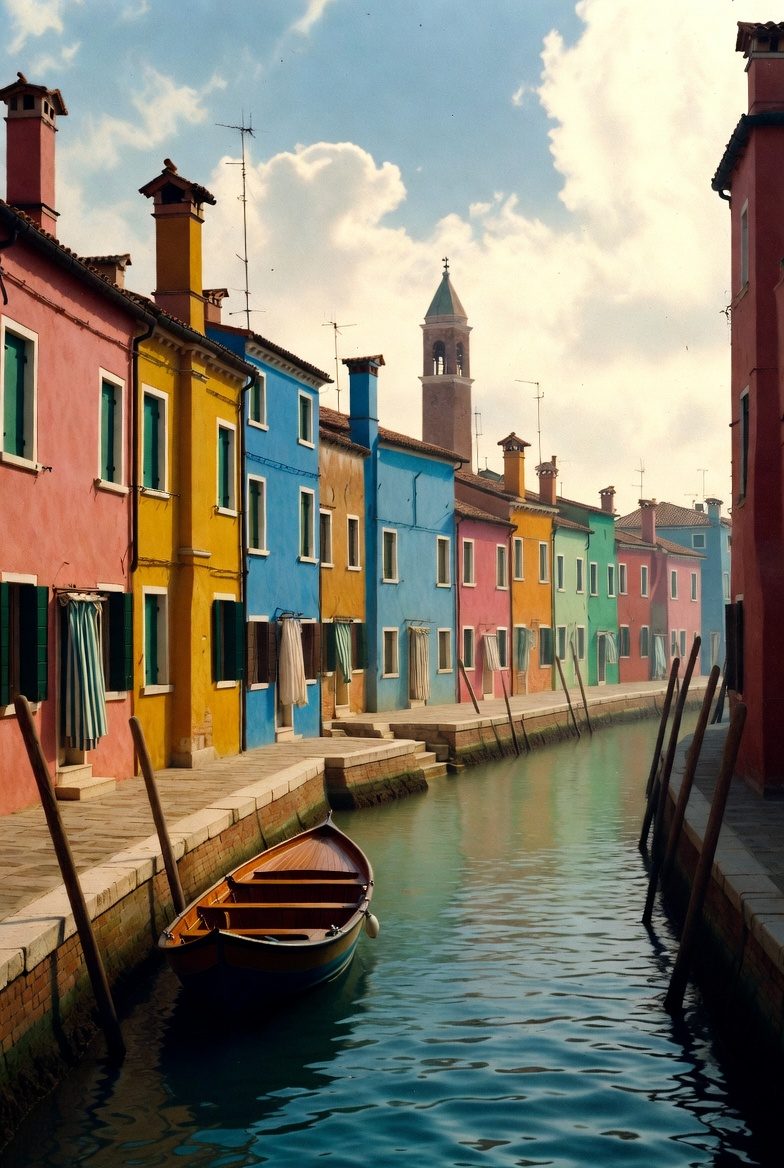
An island of painted houses in the northern lagoon — Venice's lace-making town, kept brightly colored so its fishermen c…
Palazzo Ducale
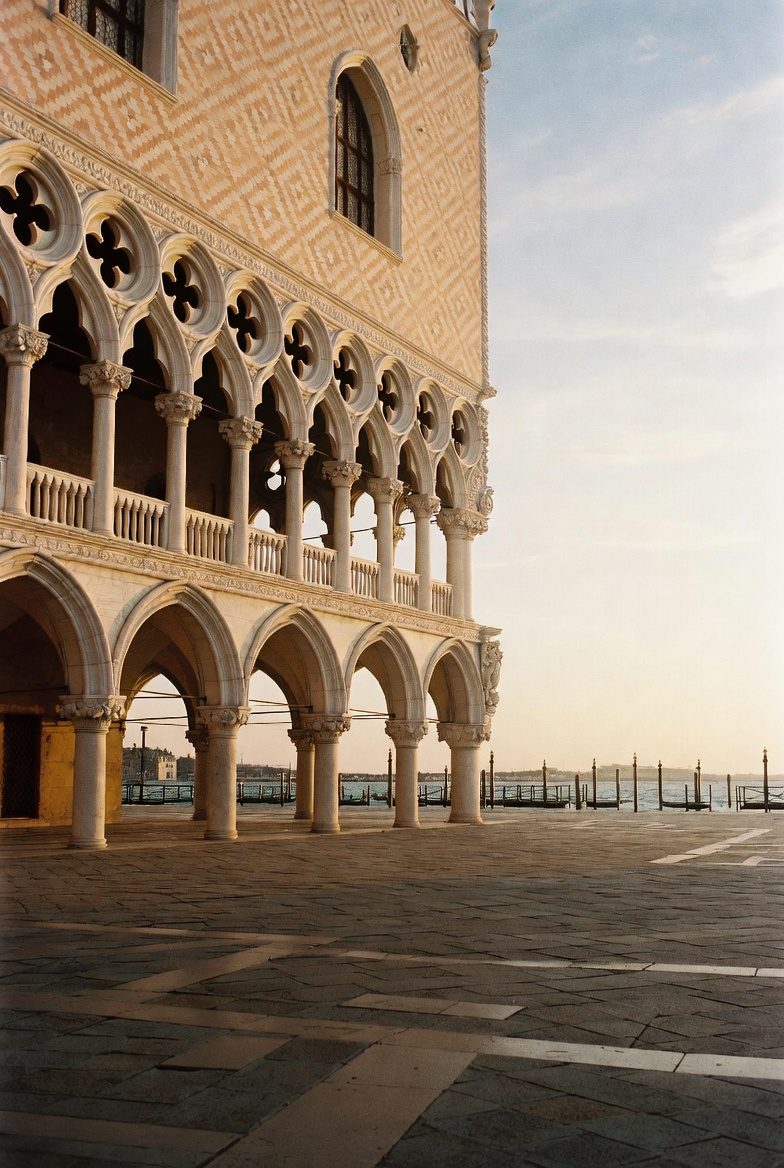
For nearly a thousand years this was the political centre of the Republic — the doge's residence, the supreme court, the…
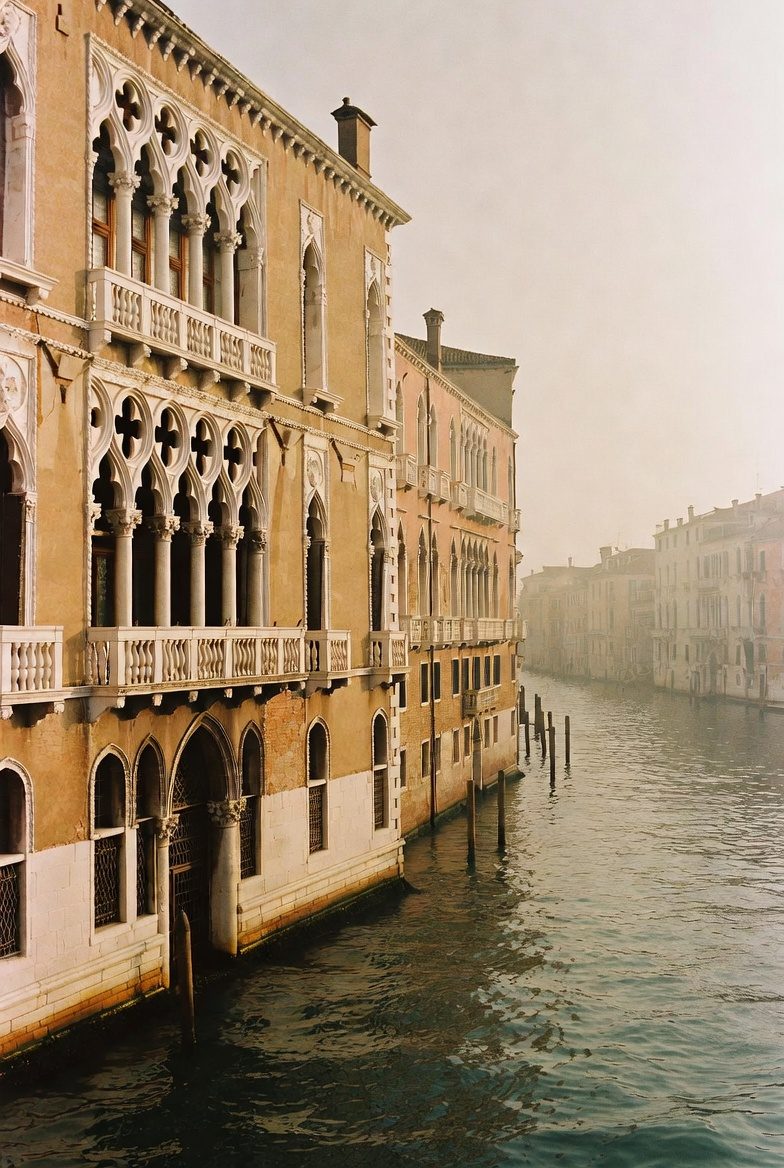
Ca' d'Oro
The most beautiful Gothic façade on the Grand Canal — once gilded leaf by leaf, hence the name, and now the home of a sm…